
Linux Server Administration
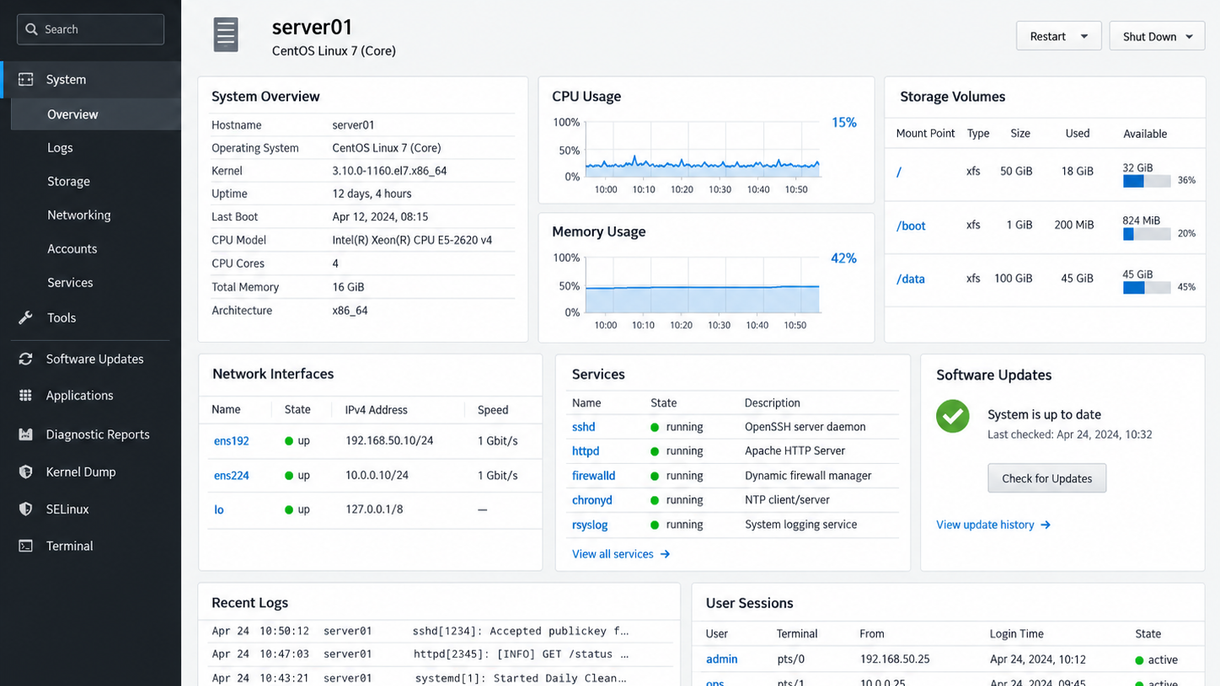
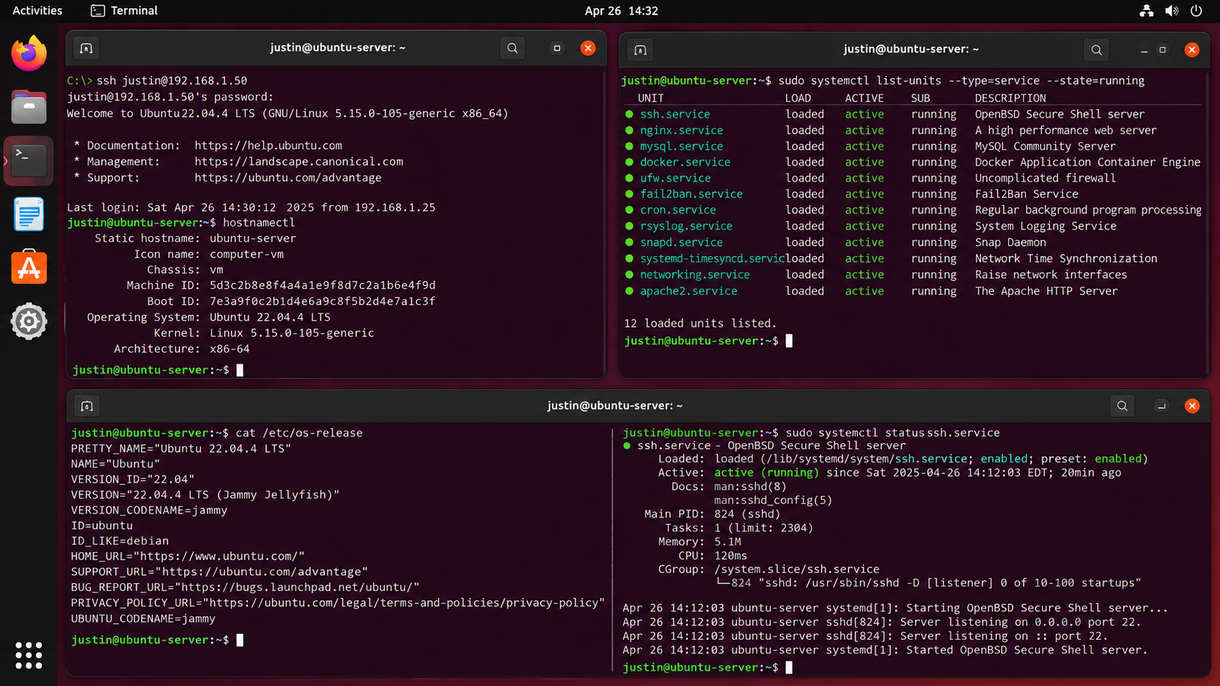
Linux server administration across CentOS and Ubuntu environments, including remote access, service management, networking, system monitoring, and core server operations.
- Environment Lab / Demonstration Environment
- Scope Linux Systems & Services
- Platforms CentOS · Ubuntu Server · SSH · systemd
- Focus Administration · Services · Monitoring · Troubleshooting
Linux servers provide the foundation for many web, database, infrastructure, and application services. This project highlights administration across CentOS and Ubuntu systems, including remote SSH access, service management, network configuration, resource monitoring, logging, security services, and general operating-system maintenance.
System & Service Administration
Linux services are managed through tools such as systemd to start, stop, enable, inspect, and troubleshoot background processes. Monitoring service state and system resources helps maintain reliable operation of web, database, networking, and infrastructure workloads.
Remote Access & Command Line
SSH provides secure remote administration of Linux servers for configuration, maintenance, troubleshooting, and monitoring. Command-line tools provide direct visibility into operating-system information, interfaces, processes, logs, services, and resource utilization.
Monitoring & Security
Linux administration includes reviewing CPU, memory, disk, network activity, system logs, firewall status, and service health. Tools such as UFW and Fail2Ban can complement system monitoring by helping control network access and reduce repeated unauthorized login attempts.
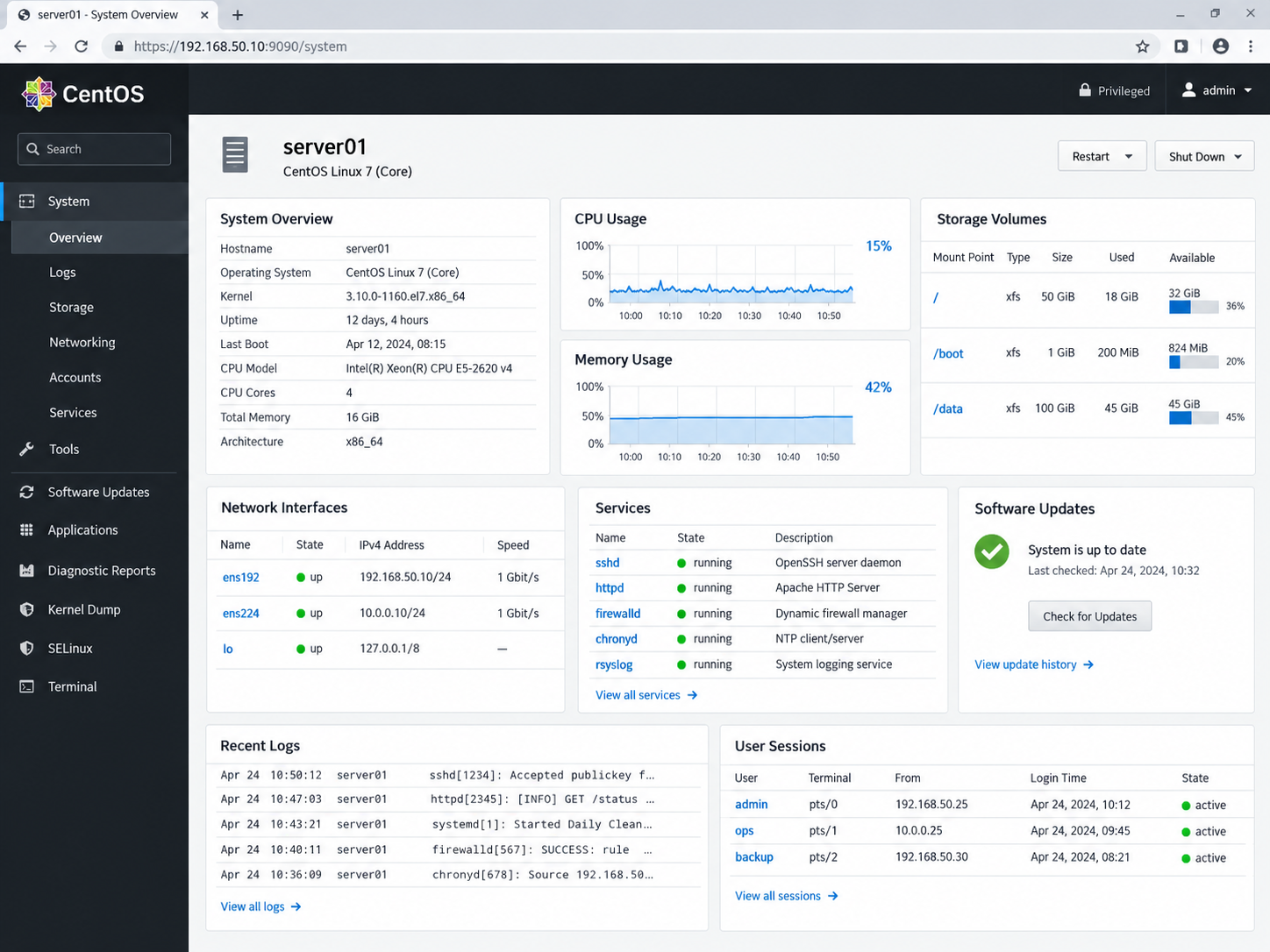
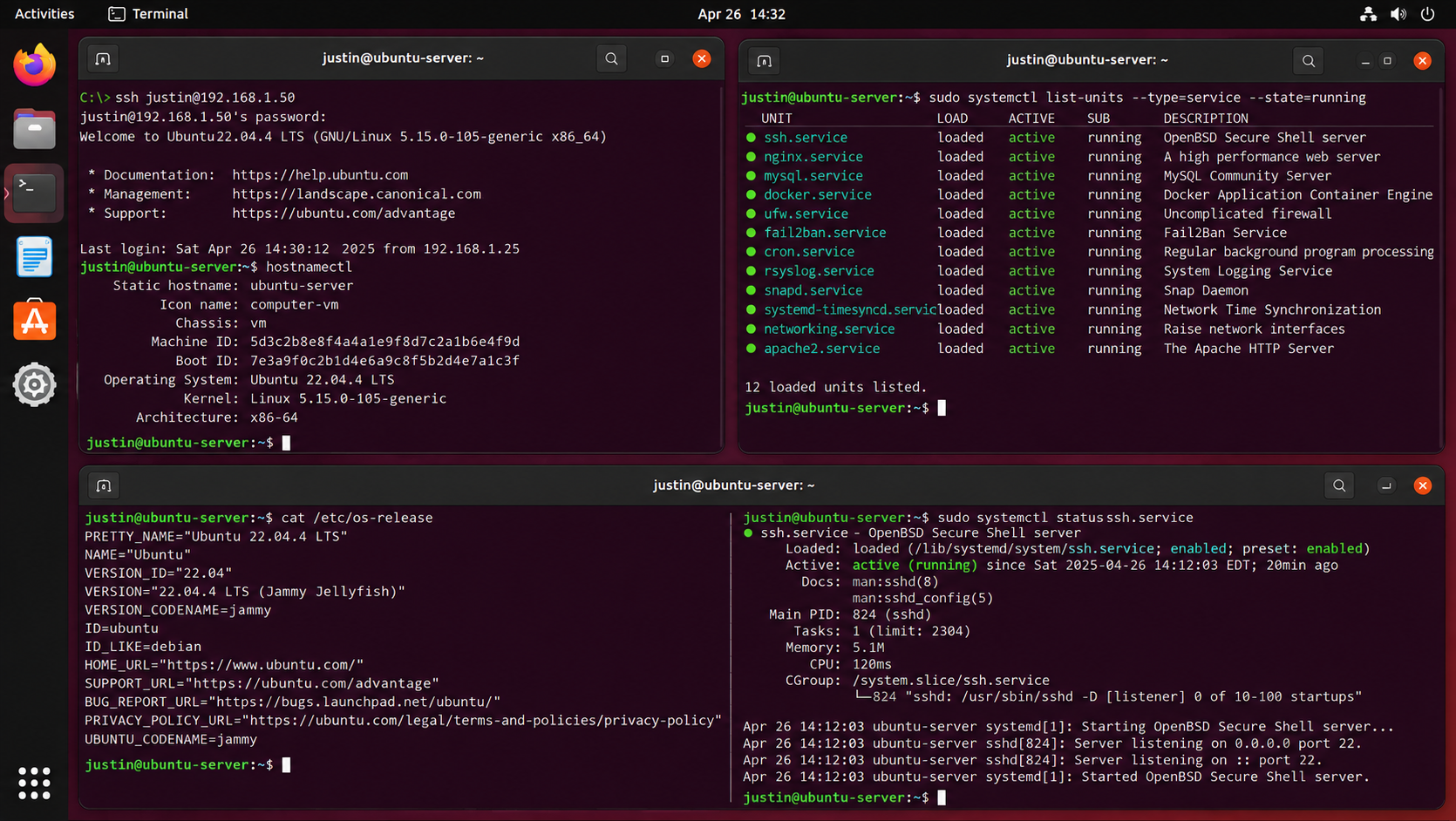
Working across multiple Linux distributions reinforces the core administration skills that remain consistent between environments: remote access, service management, networking, resource monitoring, security, logging, and troubleshooting. Familiarity with both graphical and command-line administration provides flexibility when supporting Linux-based infrastructure and applications.