


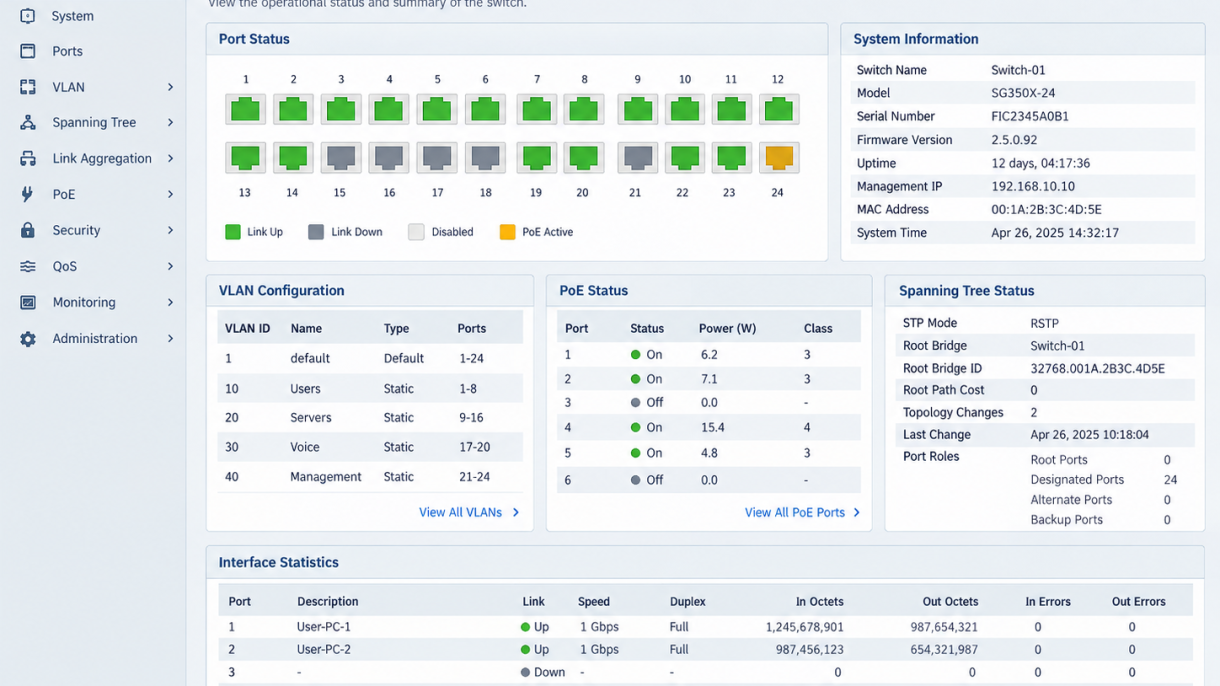
Managed Network Infrastructure
Multi-vendor network administration spanning managed switching, wireless infrastructure, VLAN segmentation, PoE, client connectivity, and network visibility.
- Environment Lab / Demonstration Environment
- Scope Switching, Wireless & VLANs
- Platforms UniFi · Aruba · Cisco
- Focus Configuration · Monitoring · Troubleshooting
Modern network environments often combine equipment from multiple vendors, each with different management tools and workflows. This project highlights experience working across managed network platforms to organize switching, wireless access, VLANs, connected devices, PoE resources, and overall network health from centralized administration interfaces.
Network Architecture
Network infrastructure is organized around clear device roles, logical segmentation, and reliable connectivity between users, servers, wireless systems, and network services. Centralized management provides visibility into device health, connected clients, traffic, and infrastructure status.
Switching & Segmentation
Managed switching supports VLAN configuration, port administration, PoE devices, uplinks, and separation of traffic across user, voice, server, wireless, and management networks. These controls help maintain an organized and manageable network environment.
Monitoring & Troubleshooting
Network dashboards provide real-time insight into switches, access points, connected clients, interface utilization, alerts, and performance trends. This visibility helps identify connectivity issues, overloaded interfaces, offline devices, and other conditions requiring attention.
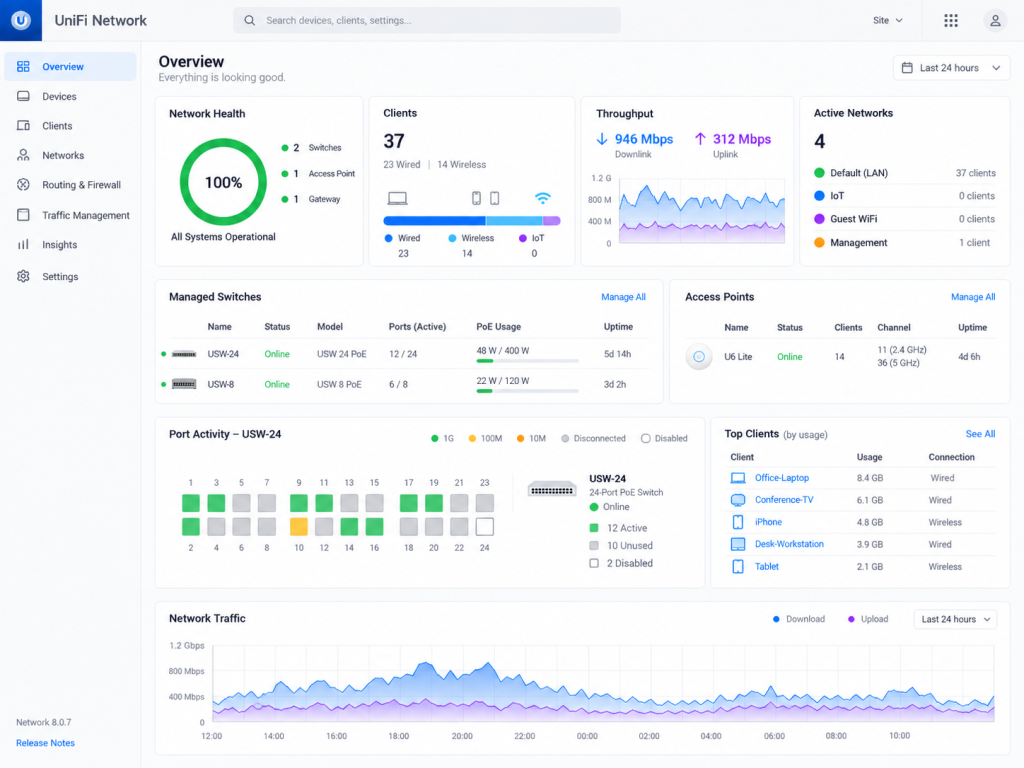
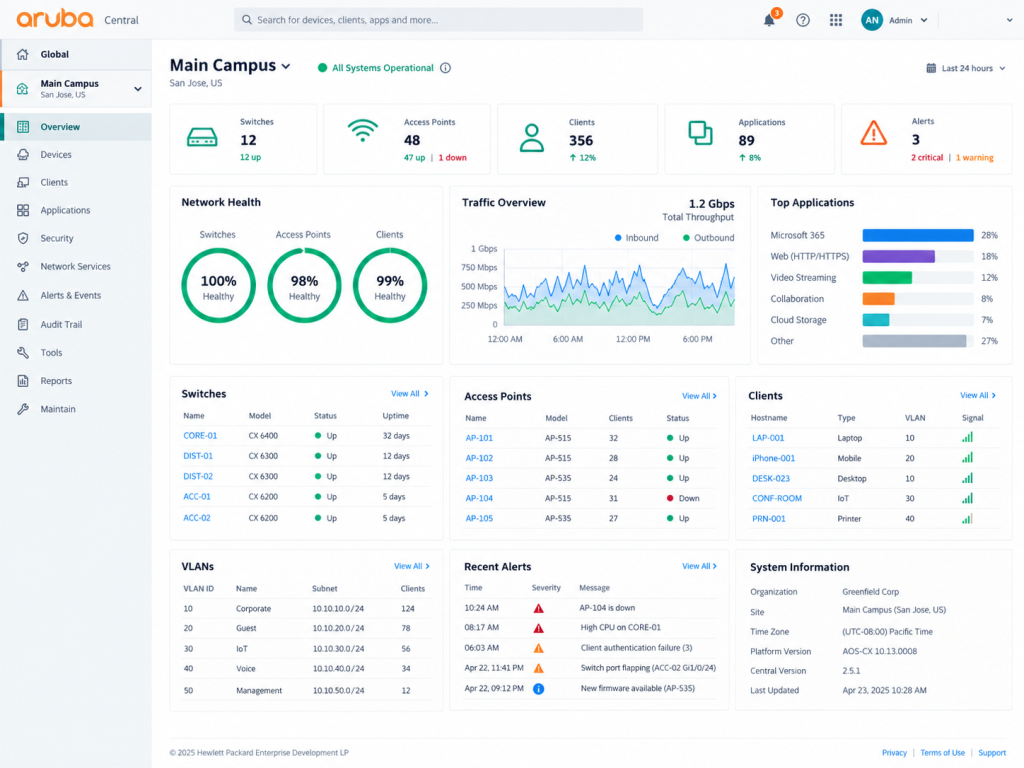
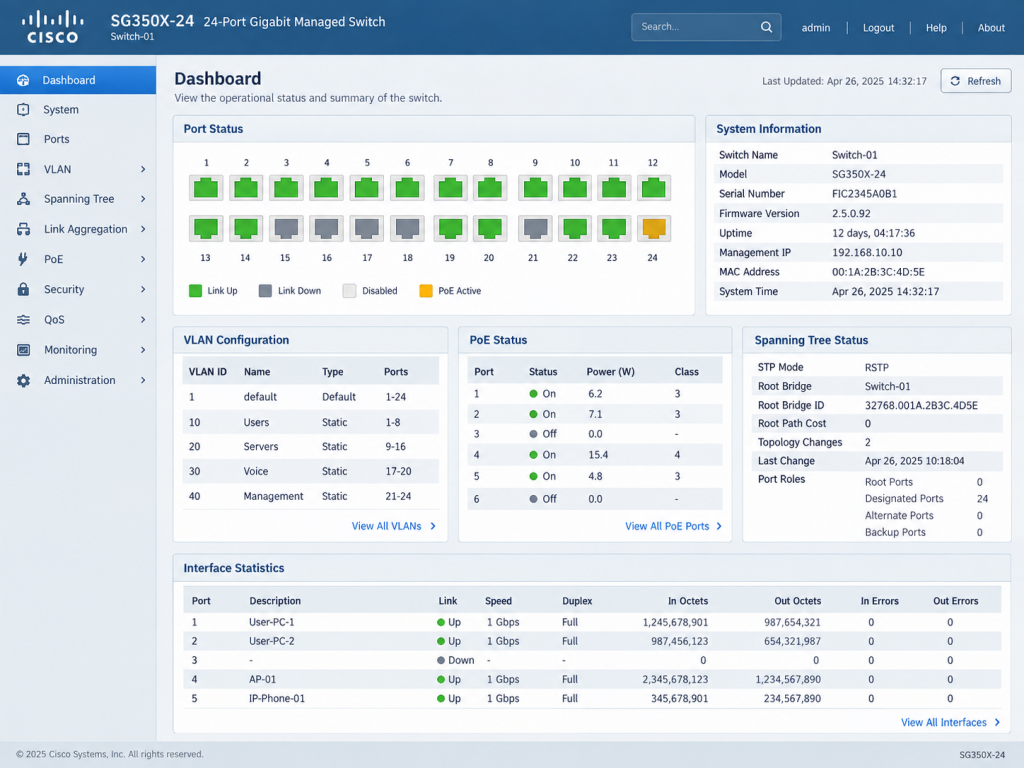
Working across different network platforms requires understanding the underlying networking concepts rather than relying on a single vendor interface. Familiarity with multiple management environments makes it easier to adapt to existing infrastructure, troubleshoot mixed-vendor networks, and support technology as organizational needs change.